Saturday, June 11, 2022

Latvia's "oppressed" Russians

I recently wound up in a still-ongoing Twitter argument about Kosovo, its history, and whether Serbs or Albanians have the more indigenous claim. Serbs are adamant Kosovo is Serbian land, that Albanians are interlopers. Indeed, that Albanians did not even exist as a people until the Ottoman Empire created them.

The discussion inevitably descended into whataboutism. Who was I to discuss Kosovo when Latvians oppressed Russians?

You're lying [that Russian propaganda about Latvia's oppression of Russians is lies]! What Russian propaganda? When I was in Latvia a couple of months ago, Russians are literally second-class citizens. Not only that, they fear for their lives and must not say anything against the policies of your government. And then Putin is a dictator? and In Russia everyone has the same rights and we are allowed to criticize the government. [translated from Serbian]

More troubling than this false Russian narrative is that more than 30 years after fully restoring sovereignty, Latvians must learn Russian order to have any career opportunity. Even the LIDO restaurant chain conducts employee meetings in Russian because Russians still refuse to learn Latvian—and Latvians indulge them.

Our mailer editorial from September 2004 could have just as easily been written yesterday. From our archives:

Editorial, September 3, 2004

I read Boris Kagarlitsky's thoughts on "A Common Baltic Future" [read article here] with great interest. I found, however, that they share a fundamental flaw with much of the analyses disseminated about the "problem" of Latvian Russians: that the Latvian nationalists fear the application of EU objectivity and norms because it will stop their abuse of Latvian Russians. That is the basis of Mr. Kagarlitsky's alleged "paradox."

Indisputably, Latvian nationalists look to EU membership to re-affirm the Baltics' western European heritage—even under czarist Russia, the Baltics exercised a considerable degree of autonomy and remained western in outlook. A fundamental point which Mr. Kagarlitsky misses, however, is that Latvian nationalists also look to the EU for objectivity regarding the situation of Latvian Russians. They seek an effective counterbalance to Russia's wide-ranging and ceaseless assault on the Baltics, from the Duma's jingoistic pronouncements on human rights violations—the Baltics' treatment of Russians is apparently more evil than the Russian army's practice of exploding Chechen bodies to prevent identification—to the Duma's resolutions that the Baltics joined the Soviet Union voluntarily and legally—and that to suggest otherwise is an anti-anti-fascist—i.e., Nazi—lie.

The true paradox is that Russia, as self-appointed proxy for Latvian Russians, does not seek EU objectivity. It rejects outright any objectivity that fails to fit its anti-Baltic agenda. The OSCE position on the validity of Latvia's language laws is clear and indisputable; that position is now under frontal assault: Russia and its more oppressive CIS partners, in a joint declaration, recently took the OSCE to task for pointing out their human rights violations—the aforementioned exploding bodies, widening suppression of a free press, et al.—while turning a blind eye to atrocities committed daily in Estonia and Latvia.

Indeed, Mr. Kagarlitsky takes up Russia's "blind eye" argument in his direct assertion that the Baltics are not being held to EU standards: "attempts by the Latvian government to drastically reduce the availability of Russian-language instruction in public schools flagrantly contradicts European norms," and, "if the interests of minorities were a concern for Western politicians, Latvia and Estonia would not have been admitted to the EU until they had brought their laws in this area into line with European norms." This EU-Baltic axis "consipiracy theory" plays well in domestic Russian politics and international posturing, but it is no more than Russian misdirection and misinformation taking on the guise of veracity by way of endless repetition.

If one scrutinizes minority language schooling within the EU, there is no simple declaration demanding such; rather, one finds a formalized process for preserving the languages of centuries-extant indigenous minorities evaluated and executed on a case by case basis. (In Latvia, this could apply to schooling in Liv or Latgalian.) Regardless, there is nothing in Latvia's language policies which precludes Russian cultural instruction in Russian. As a parallel, I was born and grew up in New York, but attended Latvian school on the weekend, studying grammar, literature, history, and geography in my parents' native language. Conversely, my parents learned English in order to fully participate in the life-blood of their new home.

And therein lies the true crux of the issue. The situation is not one of Latvians systematically attempting to wipe out the Russian language and culture—even every one of my relative says "Davai!" for "Okay!" It's not the preservation of Russian that is at issue, it is Latvian Russian refusal to learn Latvian. There is a minority of Latvian Russians who:

  • continue to hold the Latvians and Latvian language in utter disdain;
  • continue to believe that Soviet preferential treatment of Russians versus Latvians is a natural state of entitlement;
  • and that denial of that entitlement is oppression.

When Russian journalists held their worldwide convention in Latvia in August, 2000, to discuss the state of Russians abroad, they expected to hold Latvia—the global epicenter of Russian minority abuse—accountable to the world. Instead, even Duma politicians in attendance freely admitted that what they found was far different from what Russian pronouncements and Latvian Russian "rights-advocates" had led them to expect.

Put bluntly, the refusal to learn Latvian by segments of its Russian minority is not a defiant act of Russian cultural preservation. It is a blatant effort to perpetuate perceived Russian supremacy through denial of the Latvian state. And therein, perhaps, we find the true motivation of the Russian Duma in its endless denouncements of the Baltic "situation": its collective weltschmerz over how things are—independent autonomous Baltic states—and how it wishes they were—continued Soviet/Russian domination and state-paid vacations for Duma members to Jurmala, the Latvian Riviera.


Boris Kagarlitsky (Russian: Бори́с Кагарли́цкий; born 29 August 1958) is a Russian Marxist theoretician and sociologist who has been a political dissident in the Soviet Union and in post-Soviet Russia. He is coordinator of the Transnational Institute Global Crisis project and Director of the Institute of Globalization and Social Movements (IGSO) in Moscow. Kagarlisky hosts a YouTube channel "Rabkor," associated with his online newspaper of the same name and with the IGSO. (Russia declared Kagarlisky and IGSO as "foreign agents" in 2021). [at Wikipedia]

Tuesday, May 3, 2022

Told you so!

Our Internet access and cable TV access has been limited the past few days. Away from the minute-by-minute onslaught of horrors from Ukraine and the backsliding which the U.S. Supreme Court appears ready to engage in, to nullify abortion rights, our thoughts turned to the question, why is Putin in any way a surprise?

That Russia has been invading its neighbors before USSR had died and has continued to do so since over the past 30-plus years is no surprise. That is what the Kremlin does regardless of regime. After all, it was Yeltsin — darling of the West — who invaded Moldova's Trans-Dniester.

What is surprising to us, though, is the lack of attention to Putin's thin skin and authoritarian tendencies, obvious from the very start. Only a month after Putin took office as the elected—having been appointed by Yeltsin as his successor, president, these were the headlines that had already been in the news:

  • "Clinton's exit, Putin's entrance" (12 May 2000) — FSB plans to preemptively discredit politicians suspected of planning to say something damaging about the Kremlin — extending to politicians in Georgia and the Baltics
  • "Back to the USSR" (29 May 2000) — One of Putin's first decrees as president was the reintroduction of compulsory military training—topics including: Russian army history, loading a Kalishnikov, and synchronized marching (tellingly, Yeltsin outlawed this as one of his first acts of his presidency); last year, he restored a plaque to former president and KGB leader Yury Andropov on the walls of the Lubyanka; he recently unveiled another plaque honouring Russia's war heroes with Stalin's name listed first; also, a commemorative coin decorated with Stalin's face has been issued and there are plans to install a new bust of the Soviet tyrant at Russia's main war memorial.
  • "Disquiet over Putin's appointments grows" ( 1 June 2000) — The aggregation of Russia into 7 super-regions; power granted to Putin to sack elected regional governors, dissolve regional assemblies and deprive governors of their seats in the Federation Council (the upper house of the national parliament); finally, "The most bizarre media casualty, however, has been the lifesize doll made in Mr Putin's likeness and used in Kukly, the Russian version of Spitting Image. The NTV channel, which runs the country's most popular show, said the Putin puppet had been 'temporarily withdrawn'."
    • "But is it curtains for the Putin puppet?" (30 May 2000) — "NTV anchorman Yevgenii Kiselev announced on 29 May that NTV has reached an agreement with the Kremlin to withdraw the puppet caricature of President Vladimir Putin from the cast of the popular satirical show, 'Kukly.' An NTV spokeswoman told dpa that the Kremlin had asked the producers of "Kukly" to no longer feature the Putin puppet, which has an extremely large nose and wears the neck-kerchief characteristic of the Soviet-ear Pioneers." However, earlier, in February...
    • "Puppets safe for now" (11 February 2000) — "Presidential spokesman Aleksei Gromov told reporters on 10 February that acting President Putin does not intend to file any complaints against the popular weekly puppet show 'Kukly'." So, "for now" means "3-4 months at most."
  • "Russia Seizes Human Rights Report" (31 May 2000) — Amnesty International's reports on Chechnya confiscated because the reports appeared to be "anti-Russian government propaganda"
And we know all too well that Putin's leveling of Chechen capital of Grozny is the model for his current genocide against Ukrainians. Where is the surprise? What surprise? Q.E.D.

Monday, April 4, 2022

Latvian Legion redux

The charges that the Latvian Legion were Nazis, that those who commemorate them are part of the rise of neo-Nazis who glorify the Holocaust, have been unremitting for the past two decades ever since the Kremlin launched its successful hijacking of the anti-Nazi cause and declared Latvians "Nazis." 


Carefully cropped photograph published in Der Spiegel purports to portray Nazis marching in Rīga. It is actually a photo of the annual Latvian Legion commemoration procession having arrived at the Freedom Monument (not visible) at the heart of Rīga and witnessing the changing of the guard at the monument.

Unsurprisingly the topic came up in conversation on Twitter that originated with "Ukrainians are Nazis." A 2018 Haaretz article was cited in conversation as typical of the ubiquitous coverage regarding Latvian Nazis.

In response, the Haaretz article was subsequently reviewed in detail, rebutting its contentions and providing additional historical background, on latvianlegion.org.

Contentions rebutted and key content include (links active):

Saturday, February 26, 2022

Russia's War on Ukraine

From its vodka — born of Ukrainian Cossack horilka, to its very origins as a culture — insisting Kievan Rus' is Russian not Ukrainian, Russia has envied Ukraine and claimed it as its own. In truth, the Ukrainian and Russian cultures parted ways some 1,500 years ago. But since Putin has claimed Ukraine is neither a separate country nor culture, we first had to make it clear that his claim is false.

The origin of Putin's full-scale war against Ukraine, however, is less one of cultural appropriation and more the culmination of a Russian campaign pre-dating Putin and originating prior to the dissolution of the USSR to

  • destabilize nascent democracies in the former Soviet orbit and, subsequently, to
  • re-integrate former Soviet territories back into Russia.

This campaign has been monumentally successful, spurred on in large part by three decades of minimal negative consequences to Russia for its territorial aggression against its neighbors.

Moldova's Trans-Dniester — a template for aggression

February-March, 1990 — Moldova holds its first free parliamentary elections since having been joined to the USSR, Popular Front of Moldova wins landslide victory. Soviet loyalists "fearing" Moldovan-Romanian reunification declare themselves a republic in the Trans-Dniester, aka Pridnestrovie ("by the Dniester") or Transnistria, a strip of territory along the left bank of the Dniester river containing most of Moldova's industrial assets.

September 2, 1990 — Russian-backed separatist election declares Transnistria an independent republic.

November 2, 1990 — Armed conflict erupts in Dubăsari: pro-Transnistrian forces, including Transnistrian Republican Guard, militia and neo-Cossack units, and units of the Russian 14th Guards Army versus pro-Moldovan forces including Moldovan troops and police.

January 20, 1991 — Russian Black Beret OMON forces under the command of Vladimir Antyufeyev shoot freedom demonstrators in Rīga, Latvia, including killing cinematographer Andris Slapiņš by sniper fire.

August 19–22, 1991 — Soviet coup d'état attempts to remove Gorbachov from power, Antyufeyev is among the coup supporters; August 19th was the date Yeltsin stood on a tank in defiance.

September, 1991 — Viktor Alksnis sends Antyufeyev and his unit into Moldova to ensure successful breakaway of its Trans-Dniester region under Russian control.

December, 1991 — Igor Smirnov, Lenin wannabe complete with goatee, wins election as first "president" of Transnistria. To "prove" victory, the PMR authorities show election results, every last person and who they voted for, to Pål Kolstø, Professor of Russian and Central European and Balkan Area Studies at the University of Oslo, who is horrified. Antyufeyev is appointed Minister of Security of Transnistria under the false name Vadim Shevstov.

March, 1992 — Fighting escalates between Moldova and Transnistrian separatists.

Let us recount, for example, the events of the first days of March [1992], that had catalyzed the spring confrontation at Dubossary. In the night of the 3rd of March a tragedy occurred in the Grigoriopol region. Bandits gunned down an ambulance car that carried a pregnant woman to a hospital. A midwife was killed and the driver, the woman and other passengers were wounded as a result.

Smirnov blamed the deed on Moldovan volunteers and declared the state of emergency in the Dubossary district. The 6th of March 1992 was declared "Black Friday", and on the central street of the city a [public] funeral was held for the dead. Smirnov was either insincere, or didn't know the whole truth himself [because] the ambulance car with the pregnant woman was gunned down by Transnistrian security officers and former members of the Riga OMON: V. Nikitenko and S. Bubnov. The assignment was given to the executioners by their commander, Vadim Shevtsov [Antyufeyev], personally. R Sabirov, a witness to this heinous crime, told this to A.I. Lebed of it in 1993, and later recounted it on TV "ASKET". [Lebed was commander of the Russian 14th Guards Army occupying Transnistria.] — translated from ВОЖДЬ В ЧУЖОЙ СТАЕ, by Mikhail Bergman

Fighting, interrupted by periodic ceasefires, lasts until a final ceasefire in July, 1992.

The Kremlin conducts a massive disinformation campaign to portray the Transnistrian regime as legitimate. (Read Edward Lucas's two part series on Transnistria here and here.) Moldovan industry is privatized into the hands of Russian oligarchs, and despite acceding to multiple agreements to leave, Russian military still occupies the territory as "peacekeepers" today.

June 12, 1999 — British NATO forces at Pristina disobey orders to engage Russians and chest-thump to this day that they prevented WWIII. Putin, appointed as an acting PM less than two months later (August 9) and president at year end (December 31), takes the lesson to heart: NATO will never attack Russians or Russia itself in fear of WWIII.

How is Moldova relevant to Ukraine today?

Moldova established the model for intervention which Russia has used ever since: in Georgia's South Ossetia and Abkhazia, Ukraine's Crimea, Donbas and Luhansk; and now in the full-scale invasion of Ukraine.

  1. Stage elections = false proof of the Russophone "Russian compatriot" populace's desire to leave non-Russian state
  2. Stage incidents = false accusations and/or false flag operations against the non-Russian state of terrorism, genocide,...against Russophones
  3. Cite #1 and/or #2 as the basis for "humanitarian" intervention to protect Russophones
  4. Manufacture "news" and diplomacy campaign associated with the justification of territorial break-away and of subsequent Russian protectionist intervention.

Completing the Moldova-Ukraine connection, 23 years after killing freedom demonstrators in Latvia, 22 years after killing innocents to precipitate martial law in Transnistria, Vladimir Antyufeyev is named "Deputy Prime Minister" of Donetsk in 2014 as the neo-Soviet Kremlin moves forward with its next operation against Ukraine having completed Crimea's annexation. (The true results of the referendum to join Russia were accidentally released, then withdrawn, indicating less than 25% support.)

The events of the past three-plus decades demonstrate that while Putin is the instigator of the current bloodshed in Ukraine, he is merely the keeper of a tradition of Russian territorial aggrandizement unbroken for centuries. Let's not forget that Russia invented ethnic "cleansing", using that term for the removal of Circassians from their homeland, ultimately resulting in their genocide.

A step too far

When Russia claims the heritage of Kievan Rus' as its own, it also claims Sviatoslav I, who overextended his campaign of territorial acquisition, prematurely moving his capital southward to today's Romania. The Pechenegs assassinated him in 972 and fashioned his skull into a drinking goblet.

Since Crimea, Putin has been cremating Russian dead in eastern Ukraine using mobile crematoria, eliminating evidence of direct Russian involvement. Families of the dead are threatened to never speak of their lost ones who "volunteered." But by launching full-out war against Ukraine, Putin, too, has overextended himself and can no longer cover up Russian losses. Thousands will come home in body bags — unless Putin leaves them to rot in Ukraine's streets and fields.

When, not if, the Russian offensive grinds to a halt, we might expect Putin to declare his "punitive" campaign concluded and withdraw forces back to eastern Ukraine as "peacekeepers", and seek to make that situation permanent in "peace" talks with Ukraine. One can hope the Russian people will finally rise up and cast off the centuries-old yoke of despotic rule by which the rest of the world judges Russia and Russians, and Putin becomes the last of the Sviatoslavs. Regarldess, Ukraine will not agree to ceding any of its sovereign territory to Russia.

The alternative, that Putin achieves total victory, then kills or jails/deports all of Ukraine's leadership a la the USSR and the Baltics in WWII, and moves on to his next conquest in central-eastern Europe is one our faith in Ukraine and democracy cannot permit.

Thursday, February 10, 2022

Latvian parliament approves Jewish reparations

The Latvian parliament today passed the resolution "Regarding good-will reparations to the Latvian Jewish community." This commits the Latvian government to establish a fund of €40,000,000 to distribute over ten years, €4,000,000 a year from 2023 through 2032, to Jewish community organizations.

As reported in the news [1], funding would go toward, among other things, restoration and preservation of Latvian Jewry's historical cultural heritage, support for Jewish community organizations, property and memorial monument maintenance, financing projects associated with religion, culture, education, healthcare, and history, as well as promoting wider societal goals.

Juris Pūce: [Parliament member, chairperson of the Development/For! political alliance]: I am heartened that the Saeima [parliament] supported the law “Regarding good-will reparations to the Latvian Jewish community”. The horrific crime of the Holocaust annihilated part of Latvia's — the majority of Jewish communities. It is impossible to erase the consequences of that crime, but Latvia can demonstrate good will and compensate the community.

Ourselves: Are we differentiating the descendants of then Latvia's Jews from the influx of Soviet Russification? Will we ask Germany to support reparations? After all, it was not the country of Latvia — which took in pre-WWII refugees and banned anti-Semitic publications — which committed the crimes.

Perceptions of the Holocaust in Nazi-occupied Latvia are steeped in propaganda. Did the Germans, for whatever reason, find willing collaborators among the occupied? Yes, Arājs Kommando being the most notorious. Do collaborators confirm Latvia was anti-Semitic? No. Pre-WWII Latvia banned anti-Semitic publications, still took in Jewish refugees from Nazi Germany after other nations had closed their borders, and among anti-Semites, Latvia was denounced as a "Jewish country" for the positive relations between Latvians and Jews. Even after Ulmanis's (bloodless) coup, his regime continued to value Latvia's ethnic diversity; his policy committee included representatives of all Latvia's minorities, including Jews, regardless of any "Latvia for Latvians" slogans at the time.

Latvian sociologist Didzis Bērziņš questions the attitude of Latvians toward Jews: do ethnic Latvians today consider the Latvian Jewish community "our" (inclusive Latvian citizenry) or "alien" (ethno-nationalist Latvian community, non-Latvians need not apply). Did the Holocaust afflict Jews ("their" tragedy) or did it afflict Latvia ("our" tragedy)? History teaches the answer is "our." Latvia was the first country to legally recognize equal rights for all national and ethnic groups.

Kremlin-funded "anti-Nazi" activists now falsely translate "žīds" (Jew) as "kike" for non-Latvian speakers protesting at annual Latvian Legion commemorations. Pre-Soviet era, "žīds" appeared in schoolchildren's ABC's for the letter „Ž”.

There is no slur, only a word used for centuries. While "ebreji" (Hebews) was also used for "Jews" prior to WWII, it was the USSR which leveraged it to effectively erase western/central European (Yiddish-speaking) Jewish identity and replace it with imported culturally Russian/Russophone Jewry.

Rather than ask what do Latvians think of Jews, perhaps ask which Jews Latvians think they will be compensating. Do we know how many of today's Latvian Jewish community are true remnants of pre-WWII Latvia versus how many represent Soviet imports poised to appropriate a heritage and tragedy — and reparations —  which are not theirs? Are there any concerns Latvia might ultimately fund uninvited usurpers?

We hope these questions, however inconvenient, have been asked. The commitment is for a rigorous and transparent process for applications, claims, and awards — an absolute necessity to ensure spending the equivalent of €11,000 a day for 10 years on preserving Latvia's Jewish heritage tells the factual story of Latvian-Jewish relations and Jewish life in Latvia — not serve external agendas or simply line individuals' pockets.


[1]    jauns.lv/raksts/zinas/486676-saeima-pienem-likumu-par-labas-gribas-atlidzinajumu-ebreju-kopienai

Tuesday, February 1, 2022

Zedelgem POW Camp

In early 2021, Lev Golinkin, neither historian nor sociologist, published a piece in the Forward on monuments to Nazi collaborators, listing all the monuments to the Latvian Legion in Latvia, as well as the Latvian Beehive erected to the memory of the 11,700-12,000 Legionnaires held in British-administered Zedelgem POW Camp, in Belgium.

A firestorm erupted as the piece went viral, with so-called "investigations" discovering the Latvian Legion was linked to "Nazi shock troops" and giving credence to Kremlin propaganda attacking the Legion. Unsurprisingly, a committee determined the monument could not stay put as is. Research indicates that of the 11,700-12,000 Latvians held in Zedelgem, 69 can be confirmed to be Holocaust collaborators.

Apparently, Legionnaires cannot be honored in any public space. By the identical logic, there should not be any U.S. memorials to Vietnam War veterans because that would be honoring the criminals who participated in the Mỹ Lai massacre.

The Zedelgem POW camp site has added a page addressing the Latvian Beehive controversy.

The original Golinkin piece, with analysis, is available on the Latvian Legion site.

Sunday, January 23, 2022

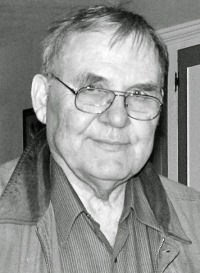
In memoriam, Professor Andrew Ezergailis

For more than a decade, a friend, inspiration, and mentor to me, Holocaust scholar Andrievs, "Andrew", Ezergailis passed away at 91.

We were deeply saddened to hear of the the passing yesterday of Latvian Holocaust scholar Andrievs (Andrew) Ezergailis.

Andrievs Ezergailis (1930-2022) -- Historian, Doctor of Humanities, foreign member of the Latvian Academy of Sciences, awarded the Order of the Three Stars 4th Class. Born in Viesīte Municipality, Latvia. As the Soviet army reinvaded Latvia, his family fled to Germany--the only other option being the dangerous attempt to cross the Baltic Sea to Sweden. In 1949, the family emigrated to the United States. After completing his doctoral studies, Ezergailis was appointed to a professorship at Ithaca College (New York state) where he lectured on Russian and contemporary European history. Ezergailis subsequently concentrated on the Holocaust in German Nazi-occupied Latvia, devoting countless articles and numerous books to the topic, including his seminal Holocaust in Latvia, 1941-1944 (1996).

Ezergailis's passion for following documents and documented facts wherever they led inspired discussion and provoked both champions and critics of his unyielding quest to strip away propaganda and hearsay to arrive at historical truth.

After the death of his wife Inta, he edited and published a four-volume anthology of her poetry.

I curate Andrievs Ezergailis' official Holocaust scholarship web site, at https://holocaustinlatvia.org.